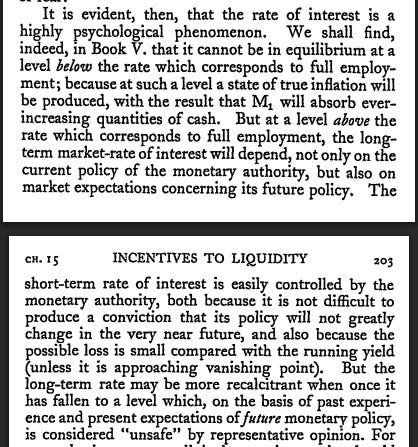
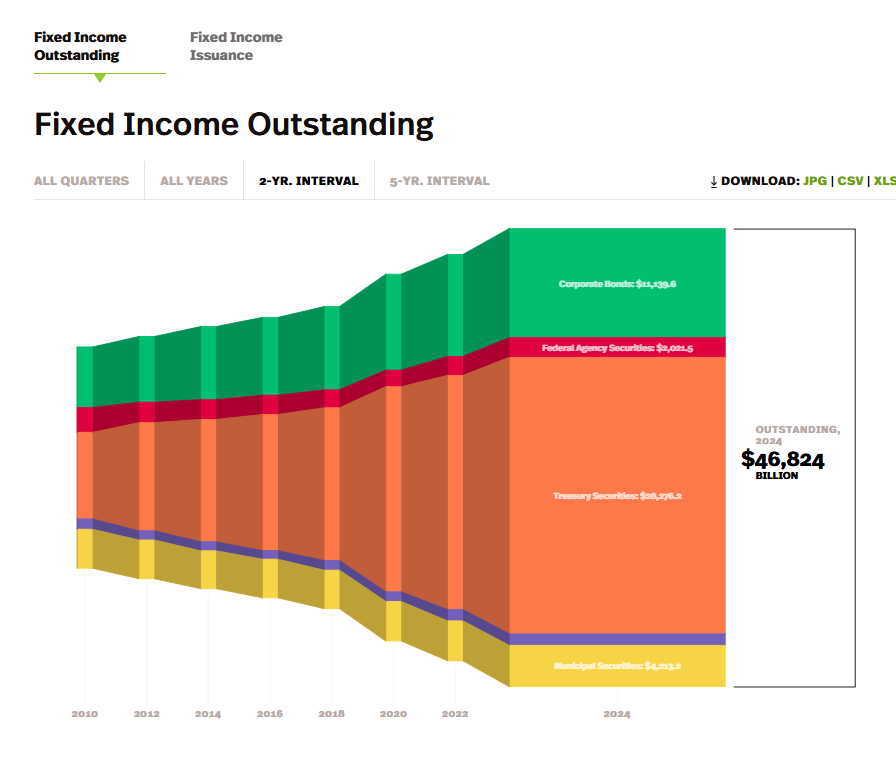
While reading The General Theory of Employment, Interest and Money, I have been collecting short notes on passages that reveal the deeper logic of Keynes’s monetary theory. These notes are not intended as a systematic summary of the book, but rather as a set of reflections on particular arguments, mechanisms, and insights that remain relevant for understanding modern financial markets and monetary policy.

When Interest Rates Are Low: Buy Bonds or Hold Money?
This passage is Keynes explaining the speculative demand for money in The General Theory (Chapter 13). The core idea is about why people hold money instead of bonds when interest rates are already very low.
Keynes says something subtle:
what matters is not the absolute level of r, but how far it is from what people consider a “safe” or normal rate.
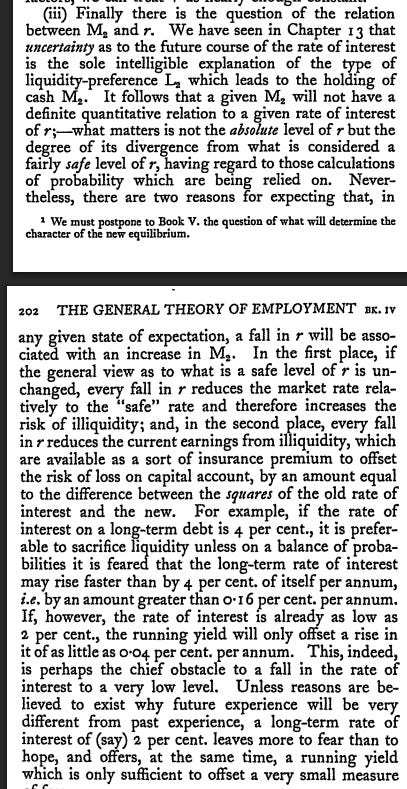
The rate of interest is a highly psychological phenomenon!
While central banks can easily influence short-term interest rates, long-term rates depend on market expectations.